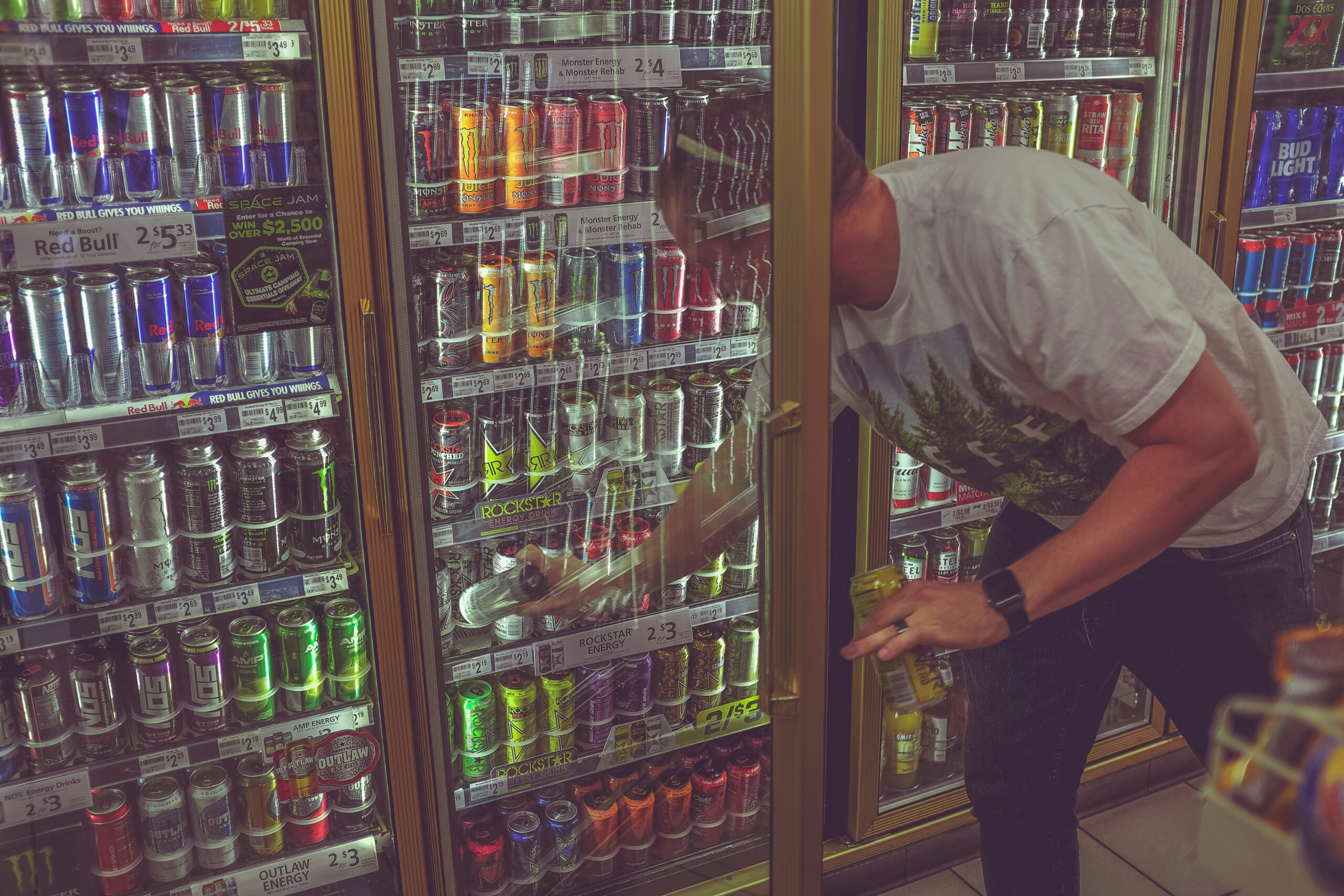
You’re standing in front of a refrigerator full of neon cans promising focus, stamina, and “clean energy.” One says zero sugar. Another says natural. A third looks like it belongs in a supplement aisle, not a gas station.
So… what’s actually the healthiest energy drink?
Short answer: it depends. Longer answer? Let’s get into it.
First, Define “Healthy” (Because Marketing Won’t Do It for You)
Energy drinks are built around one core ingredient: caffeine. Everything else, vitamins, herbs, sweeteners, is supporting cast.
According to the U.S. Food and Drug Administration, up to 400 mg of caffeine per day is generally safe for most healthy adults. That’s your ceiling. Many energy drinks push you closer to it than you realize.
So when we say “healthiest energy drink,” we’re really looking for:
- Moderate caffeine (not excessive)
- Low or zero added sugar
- Transparent ingredients
- Minimal artificial additives
Simple criteria. Surprisingly hard to find.
The Big Red Flag: Sugar Disguised as Energy
Some energy drinks still pack 25–50 grams of sugar per can. That’s not energy, it’s a rollercoaster.
The American Heart Association recommends limiting added sugar to about 25–36 grams per day. One drink can wipe that out instantly.
Translation: if sugar is high, it’s not the healthiest energy drink, no matter how “natural” the label looks.
Top Contenders for the Healthiest Energy Drink (2026)
Let’s cut through the noise. These categories tend to come closest to the “healthiest” label.
1. Green Tea–Based Energy Drinks
These use caffeine from green tea instead of synthetic sources.
Why they stand out:
- Lower caffeine levels (often 50–120 mg)
- Contains antioxidants like catechins
- Smoother energy, fewer jitters
They don’t hit as hard, but that’s kind of the point.
2. Zero-Sugar, Low-Additive Formulas
Some modern brands skip sugar and keep ingredient lists short.
Look for:
- No added sugar
- Natural sweeteners (like stevia or monk fruit)
- Around 80–150 mg caffeine
Not perfect, but far better than older formulas loaded with syrup and dyes.
3. Electrolyte + Caffeine Hybrids
These sit somewhere between sports drinks and energy drinks.
Benefits:
- Hydration support
- Lower stimulant levels
- Useful for workouts or long days
They won’t give you a massive boost, but they also won’t crash you.
What About “Natural” Energy Drinks?
Here’s where things get tricky.
“Natural” doesn’t automatically mean healthy. You can still have:
- High caffeine from plant sources
- Hidden sugars (like agave or fruit concentrates)
- Overloaded supplement blends
If the label reads like a chemistry experiment, or a smoothie menu, take a closer look.
Ingredients to Watch (Even in “Healthy” Options)
Not all red flags are obvious.
Be cautious with:
- Excess caffeine (200+ mg per serving)
- Proprietary blends (you don’t know the doses)
- Artificial colors or preservatives
- Mega-doses of B vitamins (often unnecessary)
More isn’t better. It’s just… more.
So, What’s the Healthiest Energy Drink Overall?
If we had to generalize:
The healthiest energy drink is one that:
- Has under 150 mg caffeine
- Contains zero added sugar
- Uses simple, transparent ingredients
- Doesn’t rely on hype to explain itself
In many cases, that might even be… plain coffee or tea.
Not exciting. Very effective.
A Slightly Unpopular Opinion
Most people don’t actually need energy drinks.
They need:
- More sleep
- Better hydration
- Less caffeine stacking throughout the day
Energy drinks can help, but they’re often covering up the real issue.
(Yes, that includes your third can “just to get through the afternoon.”)
Final Thought: Choose Boring Over Buzzwords
The healthiest choice rarely looks the flashiest.
It’s not the can with lightning bolts and “EXTREME FOCUS” stamped across it. It’s the one that quietly does its job without overloading your system.
So next time you’re scanning that fridge, ignore the marketing.
Flip the can. Read the label.
And pick the option that respects your body, not just your need for a quick boost.
*This article is for informational purposes only and should not be taken as official legal advice*