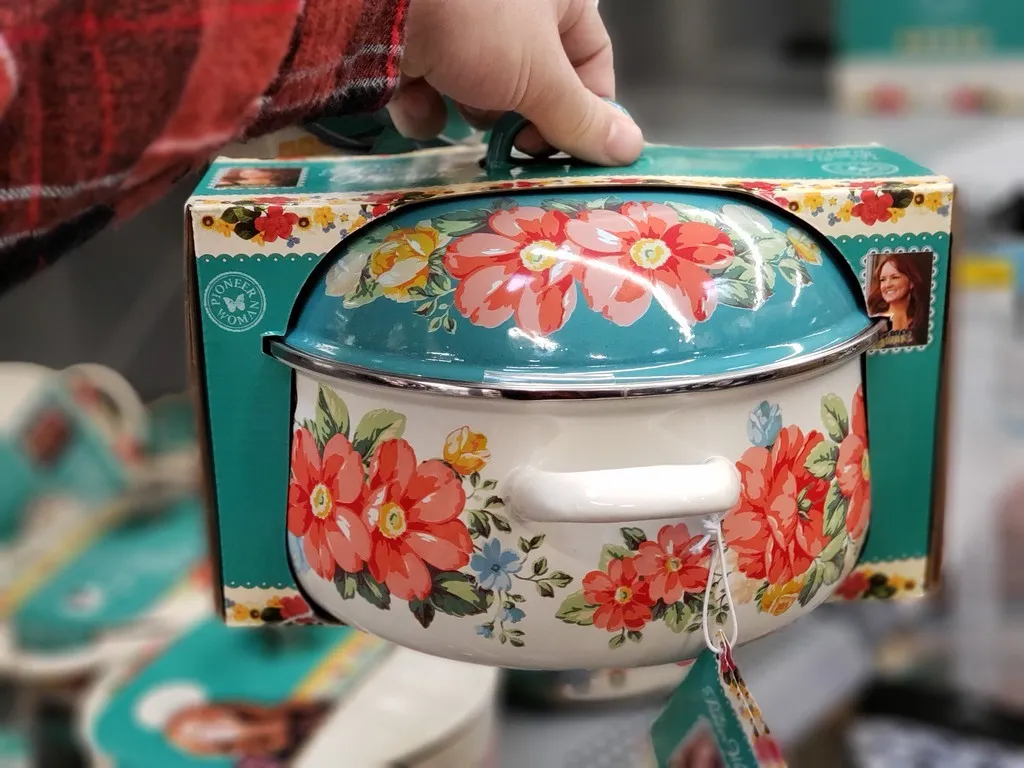
You see it stacked in bright floral patterns, usually somewhere between charming and… a little too cheerful for serious cooking. Then you check the price, and pause.
Affordable. Stylish. Everywhere.
So the real question is: is Pioneer Woman cookware actually good, or just good-looking?
Let’s get honest about it.
First Impressions: It’s Designed to Be Seen
The Pioneer Woman line doesn’t try to blend in. The colors pop. The patterns lean vintage. It’s cookware that wants to sit on your stove, not hide in a cabinet.
And that’s not accidental.
Created by Ree Drummond, the brand targets home cooks who want their kitchen to feel warm, personal, and a little nostalgic.
Function matters, but so does vibe.
Build Quality: Solid, With Limits
Most Pioneer Woman cookware sets are made from:
- Aluminum cores for heat conduction
- Porcelain enamel or nonstick coatings
- Stainless steel accents (handles, rims)
In plain terms: it’s mid-range construction.
You’ll get:
- Even heating for everyday meals
- Lightweight, easy handling
- Decent durability if used properly
What you won’t get:
- Professional-grade thickness
- Long-term resistance to heavy wear
- High-end materials like fully clad stainless steel
It’s built for home kitchens, not restaurant abuse.
Nonstick Performance: Good… Until It Isn’t
This is where expectations matter.
Out of the box, the nonstick coating works well:
- Eggs slide off easily
- Cleanup is fast
- Less oil needed
But like most affordable nonstick cookware, performance fades over time.
If you:
- Use high heat frequently
- Wash with abrasive tools
- Stack pans without protection
…you’ll likely see wear within a year or two.
That’s not a flaw unique to this brand, it’s the reality of most nonstick at this price point.
Heat Handling: Keep It Moderate
Pioneer Woman cookware performs best on low to medium heat.
Push it too far, and you may notice:
- Uneven cooking
- Faster coating breakdown
- Warping in thinner pans
It’s not designed for searing steaks at maximum heat or going from stovetop to broiler without thought.
But for:
- Pasta
- Eggs
- Sauces
- One-pan meals
…it does the job just fine.
Oven Safety: Check Before You Commit
Some pieces are oven-safe, but not all to the same temperature.
Many items handle:
- Up to 350–400°F
That’s enough for casseroles or finishing dishes, but not for high-heat roasting.
Always check the specific piece before assuming it can handle the oven.
Price Point: The Real Selling Feature
Let’s be blunt, this is where Pioneer Woman cookware shines.
Compared to premium brands, it’s:
- Significantly cheaper
- Widely available
- Often sold in full sets at accessible prices
For beginners, students, or casual cooks, that matters more than elite performance.
You’re getting style + function without a major investment.
Who It’s Best For (And Who Should Skip It)
Great fit if you:
- Cook regularly but not intensely
- Want affordable, attractive cookware
- Value easy cleanup and lighter weight
- Are setting up your first kitchen
Maybe skip it if you:
- Cook at high heat frequently
- Want cookware that lasts 5–10+ years
- Prefer professional-grade materials
- Don’t care about design aesthetics
This isn’t heirloom cookware. It’s practical, with personality.
A Quick Reality Check
There’s a tendency to judge cookware as either “amazing” or “terrible.”
Most products, including Pioneer Woman cookware, live in the middle.
It’s not going to outperform premium brands.
It’s also not pretending to.
What it offers is:
- Solid everyday performance
- A distinctive look
- A price that feels reasonable
And for many kitchens, that’s enough.
Final Thought: Buy It for the Right Reasons
If you’re expecting professional-level durability, you’ll be disappointed.
If you want cookware that:
- Works well
- Looks good
- Doesn’t cost a fortune
…then Pioneer Woman cookware makes a lot of sense.
Sometimes “good” isn’t about being the best.
It’s about being exactly what you need, and nothing more.
*This article is for informational purposes only and should not be taken as official legal advice*