You’re peeling shrimp at the kitchen counter. Your dog is sitting nearby, very still, very focused, pretending they’ve always been interested in seafood.
You pause. One shrimp in hand.
Can dogs eat shrimp?
Short answer: yes… but only under specific conditions. And if you get those wrong, that harmless little snack can turn into a digestive mess, or worse.
Let’s break it down properly, no guesswork, no vague advice.
So, Can Dogs Eat Shrimp?
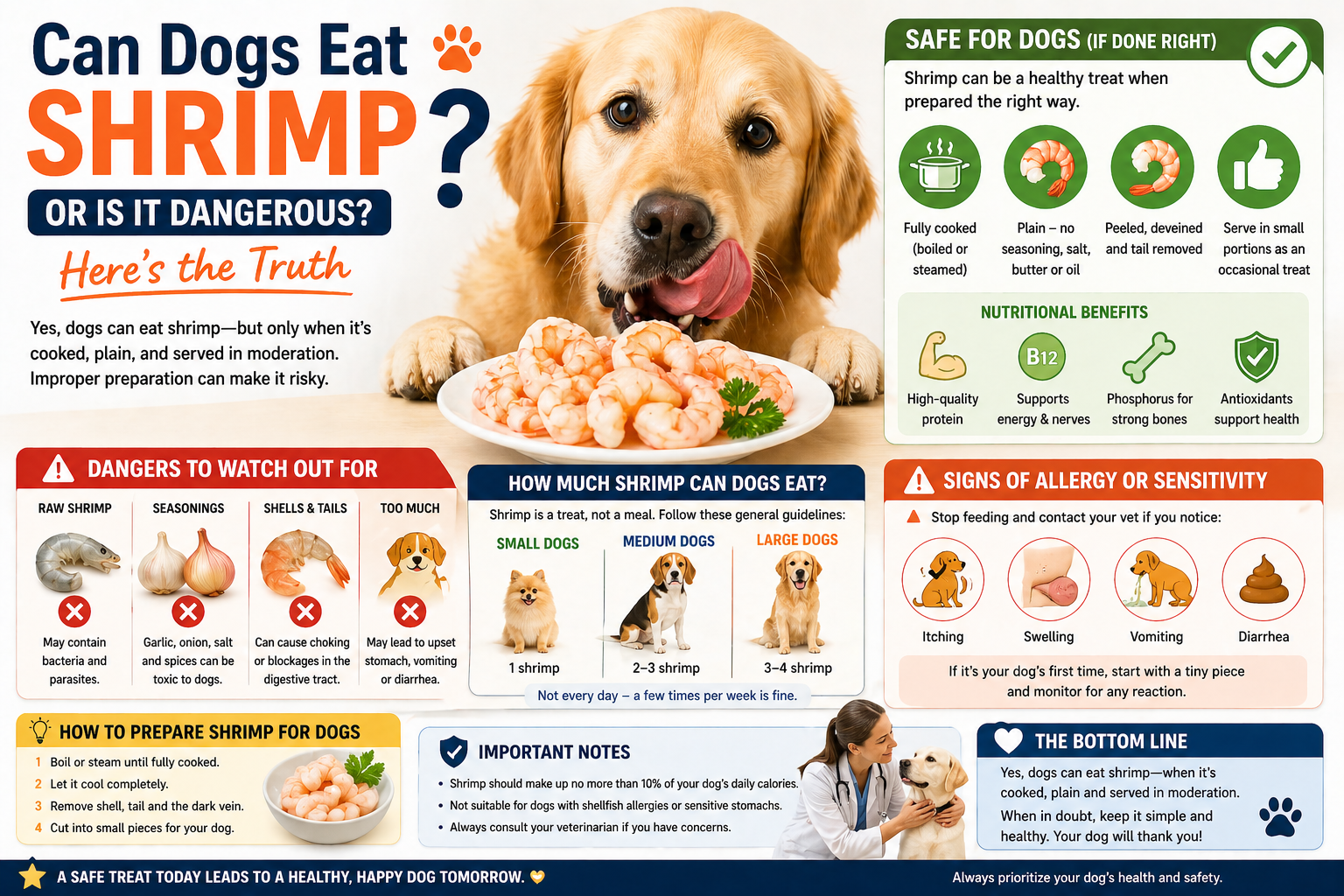
Yes, dogs can eat shrimp, but it has to be:
- Fully cooked
- Plain (no seasoning, butter, or oil)
- Shelled and deveined
- Given in small portions
Anything outside that? That’s where problems start.
Shrimp itself isn’t toxic to dogs. In fact, it contains useful nutrients. But the way humans prepare shrimp is usually the issue, not the shrimp itself.
Why Shrimp Can Actually Be Good for Dogs
When prepared correctly, shrimp offers a few benefits:
- Protein – Supports muscle health
- Vitamin B12 – Helps with nerve function
- Phosphorus – Important for bones and teeth
- Antioxidants – Including astaxanthin
According to the American Kennel Club, shrimp can be a healthy occasional treat for dogs when served safely.
But, and this is important, it should never replace a balanced diet.
The Real Risks (And Where Things Go Wrong)
Shrimp isn’t dangerous by default. It becomes risky depending on how it’s handled.
1. Raw Shrimp = Bad Idea
Raw shrimp may carry bacteria like Salmonella or parasites.
Dogs are tougher than humans in some ways, but not immune.
Cooking kills those risks. Raw feeding? Not worth it here.
2. Seasoning Is the Bigger Problem
Garlic. Onion. Butter. Salt. Spices.
All of these are common in shrimp dishes, and some are toxic to dogs.
Even small amounts of garlic or onion can cause serious health issues over time.
So if your shrimp came from a restaurant or pan with seasoning? Skip it.
3. Shells Can Be Dangerous

Shrimp shells are:
- Hard to digest
- Potential choking hazards
- Capable of causing intestinal blockages
Always remove:
- Shell
- Tail
- Vein
No exceptions.
4. Cholesterol Content
Shrimp is relatively high in cholesterol.
For healthy dogs in small amounts? Usually fine.
For dogs with existing health issues? It’s something to discuss with a vet.
How Much Shrimp Can Dogs Eat?
Think of shrimp as a treat, not a meal.
General guideline:
- Small dogs → 1 shrimp
- Medium dogs → 2–3 shrimp
- Large dogs → 3–4 shrimp
And not every day.
Too much shrimp can lead to:
- Upset stomach
- Vomiting
- Diarrhea
Moderation isn’t just a suggestion, it’s the rule.
Signs Your Dog Should NOT Eat Shrimp
Even safe foods don’t work for every dog.
Avoid shrimp if your dog:
- Has a known shellfish allergy
- Has a sensitive stomach
- Is on a restricted or prescription diet
If it’s your dog’s first time trying shrimp, start small and watch for:
- Itching
- Swelling
- Digestive upset
If anything looks off, stop immediately.
Can Puppies Eat Shrimp?
Technically yes, but cautiously.
Puppies have more sensitive digestive systems.
If you choose to offer shrimp:
- Keep portions tiny
- Make sure it’s fully cooked and plain
- Introduce it slowly
When in doubt, stick to regular puppy food. It’s designed for their needs.
What About Fried Shrimp?
Hard no.
Fried shrimp adds:
- Excess oil
- Fat
- Batter
- Seasonings
All of which can lead to:
- Pancreatitis
- Weight gain
- Digestive issues
If it’s crispy, greasy, or heavily flavored, it’s off the table.
Can Dogs Eat Shrimp Tails?
Also no.
Even though some dogs might chew through them, shrimp tails can:
- Splinter
- Irritate the digestive tract
- Cause blockages
It’s one of those risks that just isn’t worth taking.
How to Safely Prepare Shrimp for Dogs
If you’re going to share, do it properly.
Safe preparation checklist:
- Boil or steam shrimp
- Do not add salt, butter, or spices
- Remove shell, tail, and vein
- Let it cool before serving
That’s it. Simple. Clean. Safe.
Are There Better Alternatives to Shrimp?
Shrimp is fine, but it’s not essential.
Other safe protein treats include:
- Cooked chicken
- Turkey
- Plain fish (like salmon)
These are often easier to digest and lower risk.
Shrimp is more of a “once in a while” option.
What Do Vets Say?
Veterinary guidance generally agrees:
Shrimp is safe in moderation, but not necessary.
The American Veterinary Medical Association emphasizes that treats should make up only a small portion of a dog’s diet, typically no more than 10%.
That includes shrimp.
FAQs: Can Dogs Eat Shrimp?
Can dogs eat shrimp safely?
Yes, if it’s cooked, plain, and served without shells.
Is shrimp toxic to dogs?
No, but improper preparation can make it harmful.
Can dogs eat raw shrimp?
No. Raw shrimp can carry bacteria and parasites.
How often can dogs eat shrimp?
Occasionally, not as a regular part of their diet.
What happens if a dog eats shrimp shells?
It may cause choking or digestive issues. Monitor closely and contact a vet if needed.
Can dogs be allergic to shrimp?
Yes. Watch for signs like itching, swelling, or vomiting.
The Bottom Line
So, can dogs eat shrimp?
Yes, but only when it’s prepared correctly and served in moderation.
The shrimp itself isn’t the problem. The risk comes from:
- Seasoning
- Preparation
- Portions
Handled properly, it’s a safe little treat.
Handled carelessly, it’s a vet visit waiting to happen.
And if your dog is still staring at you while you read this?
You now know exactly whether that shrimp is worth sharing.
*This article is for informational purposes only and should not be taken as official legal advice*