It hits out of nowhere.
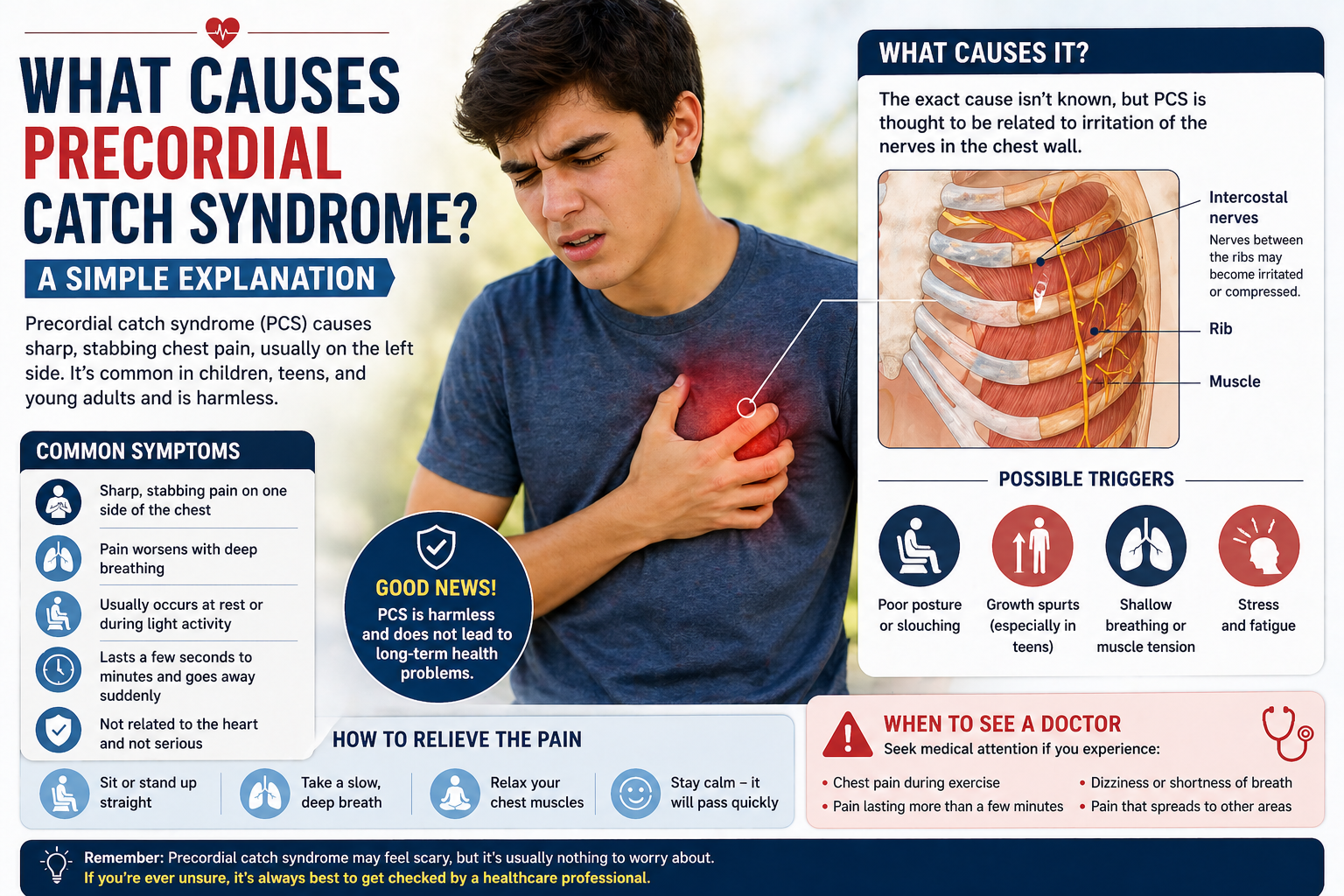
A sharp, stabbing pain in your chest, usually on the left side. It’s quick. Intense. And just alarming enough to make you stop whatever you’re doing and wonder: Is this serious?
Then, just as suddenly, it fades.
No lingering symptoms. No warning signs. Just confusion.
If that sounds familiar, you may have experienced precordial catch syndrome, a condition that feels dramatic but is usually harmless.
Let’s unpack what it is, what causes it, and why it tends to show up at the most inconvenient moments.
What Is Precordial Catch Syndrome?
Precordial catch syndrome (often shortened to PCS) is a benign chest pain condition most commonly seen in children, teenagers, and young adults.
The pain:
- Is sharp and localized (you can point to it with one finger)
- Usually occurs at rest or during light activity
- Gets worse when you take a deep breath
- Disappears suddenly, often within seconds or minutes
Despite how it feels, PCS is not related to the heart.
That’s the first, and most important, thing to understand.
According to the Cleveland Clinic, precordial catch syndrome is harmless and doesn’t lead to long-term health problems.
So… What Causes Precordial Catch Syndrome?
Here’s where things get a little unsatisfying.
There isn’t a single confirmed cause.
But there are strong theories, and they make sense once you see the pattern.
The Leading Theory: Nerve Irritation
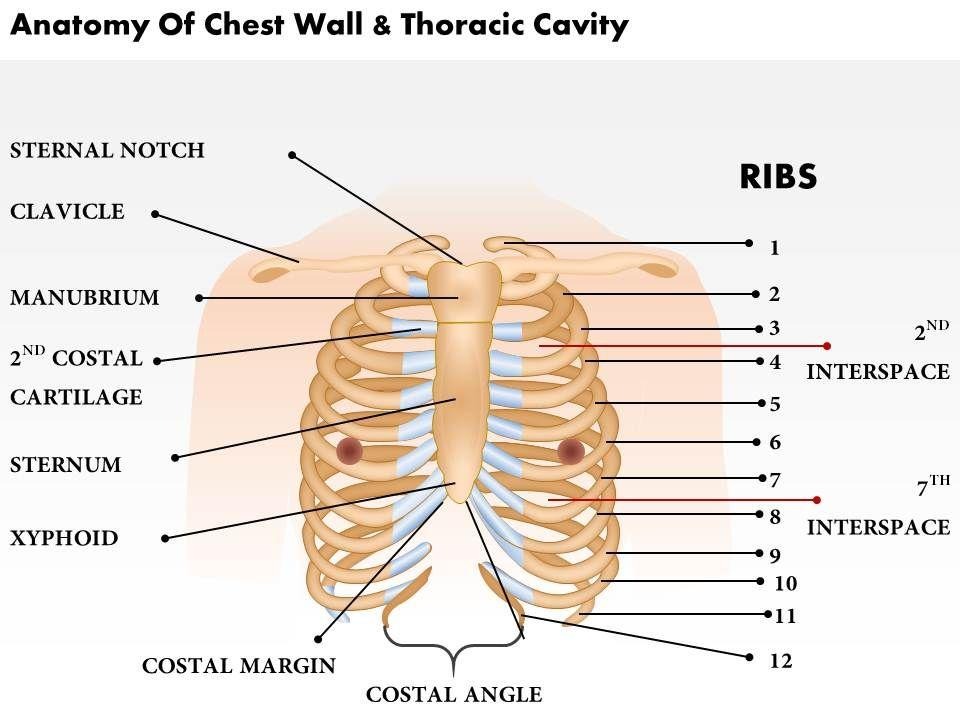
Most experts believe PCS is linked to irritation of the intercostal nerves, the small nerves running between your ribs.
These nerves help control sensation in the chest wall.
When one gets irritated or compressed, it can trigger a sudden, sharp pain.
Why does it feel so intense?
Because nerves don’t do subtle.
Posture: The Sneaky Trigger
Ever noticed the pain happens when you’re slouched?
That’s not a coincidence.
Poor posture, especially sitting hunched over, can put pressure on the chest wall and surrounding nerves.
Common triggers include:
- Sitting in a curled or slumped position
- Leaning forward for long periods
- Sudden posture changes
Straightening up can sometimes relieve the pain, or even trigger a sharp “release” sensation.
Growth Spurts (Why It’s Common in Teens)
Precordial catch syndrome shows up frequently in adolescents.
Why?
Because the body is changing quickly.
During growth spurts:
- Bones lengthen
- Muscles tighten
- Nerves adjust to new positioning
This rapid development can make nerves more sensitive, or easier to irritate.
That’s why PCS tends to fade with age.
Shallow Breathing and Muscle Tension
Another piece of the puzzle: breathing.
PCS episodes often occur during shallow breathing, when the chest wall isn’t expanding fully.
Add in muscle tension, especially from stress or inactivity, and you get the perfect setup for irritation.
Then comes the familiar moment:
You try to take a deep breath…
And the pain spikes.
Sharp. Sudden. Unmistakable.
Why Does It Hurt More When You Breathe In?
Because deep breathing stretches the chest wall.
If a nerve is already irritated, that stretch amplifies the sensation.
It’s similar to pressing on a bruise, except it’s happening internally.
This is also why many people instinctively take short, shallow breaths during an episode.
How Long Does Precordial Catch Syndrome Last?
Shorter than you’d expect.
Most episodes:
- Last a few seconds to a few minutes
- Resolve on their own
- Leave no lingering symptoms
Occasionally, a deep breath may trigger a quick “pop” or sharp spike, and then the pain disappears completely.
Strange? Yes. Dangerous? No.
How Is It Different from Heart Pain?
This is the question that matters most.
Chest pain always raises concern about the heart, but PCS behaves very differently.
Precordial Catch Syndrome:
- Sharp, pinpoint pain
- Worse with breathing
- Happens at rest
- Resolves quickly
Heart-related pain:
- Pressure or tightness
- May spread to arm, jaw, or back
- Often linked to exertion
- Lasts longer
The American Heart Association notes that cardiac chest pain typically involves pressure, not brief, stabbing sensations.
Still, if you’re unsure, it’s always better to check.
Can Stress Cause Precordial Catch Syndrome?
Not directly, but it can contribute.
Stress leads to:
- Muscle tension
- Shallow breathing
- Poor posture
All of which can increase the likelihood of an episode.
So while stress isn’t the root cause, it’s definitely part of the environment that allows PCS to show up.
Should You Be Concerned?
In most cases, no.
Precordial catch syndrome is:
- Harmless
- Not linked to heart disease
- Not progressive
But there’s an important caveat.
If your chest pain:
- Lasts longer than a few minutes
- Occurs during exercise
- Spreads to other areas
- Comes with dizziness or shortness of breath
…it’s worth getting evaluated.
Not because it’s likely serious, but because chest pain should never be ignored blindly.
How to Relieve Precordial Catch Syndrome
There’s no formal treatment, but there are simple ways to manage it.
1. Change Your Posture
Sit or stand upright. This reduces pressure on the chest wall.
2. Take a Slow, Deep Breath
It might hurt briefly, but it can “reset” the sensation.
3. Relax Your Muscles
Release tension in your shoulders and chest.
4. Stay Calm
The pain feels intense, but it’s temporary.
Over time, many people learn to recognize the pattern, and worry less when it happens.
Why Doctors Don’t Usually Treat It
Because there’s nothing to fix.
Precordial catch syndrome:
- Doesn’t damage tissue
- Doesn’t affect organs
- Doesn’t lead to complications
So treatment focuses on reassurance, not medication.
Which can feel underwhelming… until you realize that “nothing is wrong” is actually good news.
Frequently Asked Questions (FAQs)
What exactly causes precordial catch syndrome?
It’s most likely due to irritation of nerves in the chest wall, often triggered by posture or growth.
Is precordial catch syndrome dangerous?
No. It’s harmless and doesn’t affect the heart.
Why does it hurt so much if it’s not serious?
Nerve-related pain can feel sharp and intense, even when it’s not harmful.
Can adults get precordial catch syndrome?
Yes, but it’s more common in children and teenagers.
How do I stop it from happening?
Improving posture and avoiding prolonged slouching can help reduce episodes.
When should I see a doctor?
If the pain is persistent, occurs with activity, or includes other symptoms like dizziness.
The Bottom Line
Precordial catch syndrome is one of those conditions that feels bigger than it is.
The pain is real. Sharp. Uncomfortable.
But the cause? Usually minor.
A nerve. A posture shift. A moment of tension in a body that’s constantly adjusting.
And while it may catch you off guard, it doesn’t signal something dangerous.
Sometimes, it’s just your body reminding you, quite dramatically, to sit up straight and take a deeper breath.
*This article is for informational purposes only and should not be taken as official legal advice*