
You step out of the pool. Or the shower. Everything feels normal, until it doesn’t.
That faint sloshing sound. The muffled hearing. The subtle but persistent feeling that something’s… stuck.
Water in your ear isn’t dangerous most of the time, but it’s annoying enough to hijack your attention completely. And if it lingers, it can lead to irritation or even infection.
So let’s get straight to it: how to get water out of your ear safely, quickly, and without making things worse.
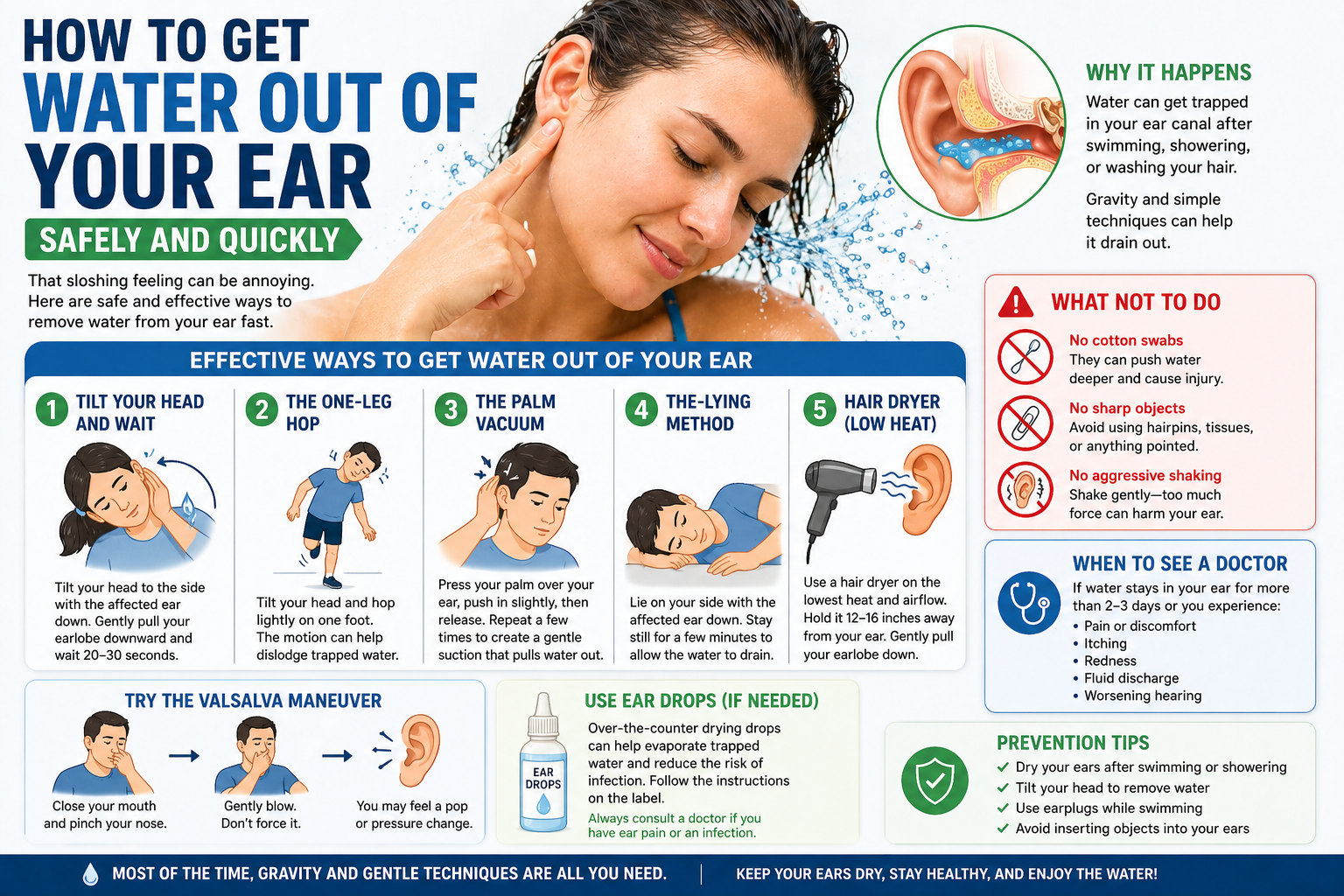
Why Water Gets Trapped in Your Ear
Before fixing the problem, it helps to understand it.
Your ear canal is shaped like a narrow, curved tube. That design protects your eardrum, but it also makes it easy for water to get trapped, especially after:
- Swimming
- Showering
- Washing your hair
- Water sports
Sometimes the water drains naturally. Sometimes it doesn’t.
And when it doesn’t? That’s when you start tilting your head like you’re decoding a signal from another planet.
The Easiest Fix: Gravity (Yes, Really)
Start simple.
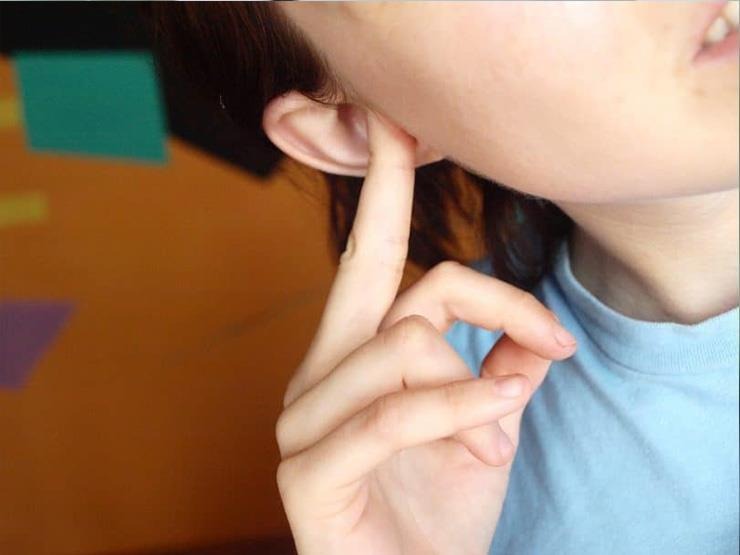
1. Tilt and Wait
- Tilt your head to the affected side
- Gently tug your earlobe downward
- Let gravity do the work
Hold for 20–30 seconds. You might feel the water shift, or suddenly drain out.
2. The One-Leg Hop
Yes, it looks silly. It works anyway.
- Tilt your head sideways
- Hop lightly on one foot
The movement can help dislodge trapped water.
Create a Gentle Vacuum (The “Palm Trick”)
This method is surprisingly effective.
How to do it:
- Tilt your head sideways
- Press your palm firmly over your ear
- Push in slightly, then release
You’re creating a mild suction effect that can pull the water out.
Repeat a few times. If it works, you’ll feel immediate relief.
Use Gravity + Motion (The Side-Lying Method)
If standing tricks don’t work, try this:
- Lie down on your side with the affected ear facing down
- Stay still for a few minutes
Sometimes the body just needs time and the right angle.
Try the Valsalva Maneuver (Carefully)
This technique is often used to equalize ear pressure, but it can also help move trapped water.
Steps:
- Close your mouth
- Pinch your nose shut
- Gently blow (don’t force it)
You may feel a slight “pop” or pressure change.
Important: keep it gentle. Too much force can damage your ear.
Evaporation Methods (When Water Won’t Budge)
If water is stubborn, drying it out can help.
1. Hair Dryer (Low Heat Only)
- Set to the lowest heat and airflow
- Hold it about 30–40 cm (12–16 inches) from your ear
- Pull your earlobe down gently
The warm air helps evaporate trapped moisture.
2. Over-the-Counter Ear Drops
You can find drying drops at pharmacies designed specifically for swimmer’s ear.
These often contain:
- Alcohol (to evaporate water)
- Acetic acid (to reduce bacteria growth)
The Mayo Clinic notes that drying the ear canal can help prevent infections when water is trapped.
What NOT to Do (Seriously, Don’t)
This part matters just as much as what you should do.
❌ No cotton swabs
They push water deeper, and can damage your ear canal.
❌ No sharp objects
Hairpins, tissues, or anything improvised? Not worth the risk.
❌ No aggressive shaking
You’re not a maraca. Gentle methods work better.
When Water in Your Ear Becomes a Problem
Most of the time, trapped water is harmless.
But if it sticks around, it can lead to swimmer’s ear (an infection of the outer ear canal).
Watch for:
- Pain or discomfort
- Itching inside the ear
- Redness
- Fluid discharge
- Worsening hearing
According to the Centers for Disease Control and Prevention, prolonged moisture in the ear creates an environment where bacteria can grow.
If symptoms appear, it’s time to see a doctor.
How Long Is Too Long?
If water stays in your ear for more than 2–3 days, don’t ignore it.
Even without pain, persistent moisture can lead to complications.
Better to get it checked early than deal with an infection later.
Preventing Water from Getting Stuck Again
Once you’ve dealt with it, you’ll probably want to avoid the experience altogether.
Simple prevention tips:
- Dry your ears thoroughly after swimming or showering
- Tilt your head to remove water immediately
- Use earplugs when swimming (if prone to trapped water)
- Avoid inserting objects into your ears
Prevention isn’t complicated, but it does require a little consistency.
Why Some People Get Water Stuck More Often
Not everyone deals with this equally.
You might be more prone if you have:
- Narrow ear canals
- Excess earwax buildup
- Frequent swimming habits
In some cases, anatomy just makes it easier for water to linger.
FAQs: How to Get Water Out of Your Ear
What is the fastest way to get water out of your ear?
Tilting your head and using gravity is usually the quickest method.
Is it safe to use a hair dryer?
Yes, if you use low heat and keep a safe distance.
Can water in your ear go away on its own?
Often, yes. But it may take time.
Why does my ear feel clogged after swimming?
Water trapped in the ear canal affects sound transmission, causing a muffled feeling.
When should I see a doctor?
If symptoms last more than a few days or include pain, itching, or discharge.
Are ear drops necessary?
Not always, but they can help if water doesn’t drain naturally.
The Bottom Line
Figuring out how to get water out of your ear doesn’t require complicated tools or risky tricks.
Most of the time, it’s about:
- Patience
- Position
- Gentle techniques
And knowing when to stop trying and let your body handle it.
Because while that trapped-water feeling is incredibly annoying, it’s usually temporary, and very fixable.
Just… maybe skip the cotton swab experiment next time.
*This article is for informational purposes only and should not be taken as official legal advice*