You hear it in your head before it ever happens.
That first “mama.”
That accidental “dada.”
That moment where sound turns into something… intentional.
And then reality: your baby stares at you, blows a raspberry, and says absolutely nothing close to a word.
So naturally, the question creeps in:
When do babies start talking?
The answer isn’t a single age. It’s a process. A slow build. A series of tiny steps that don’t look like progress, until suddenly they do.
Let’s walk through it, month by month, without the panic or unrealistic expectations.
First: Talking Doesn’t Start with Words
Before babies say anything recognizable, they’re already learning language.
They’re:
- Listening
- Observing
- Practicing sounds
- Mapping meaning to voices
So even when it feels like “nothing is happening”… a lot is happening.
Speech starts long before words.
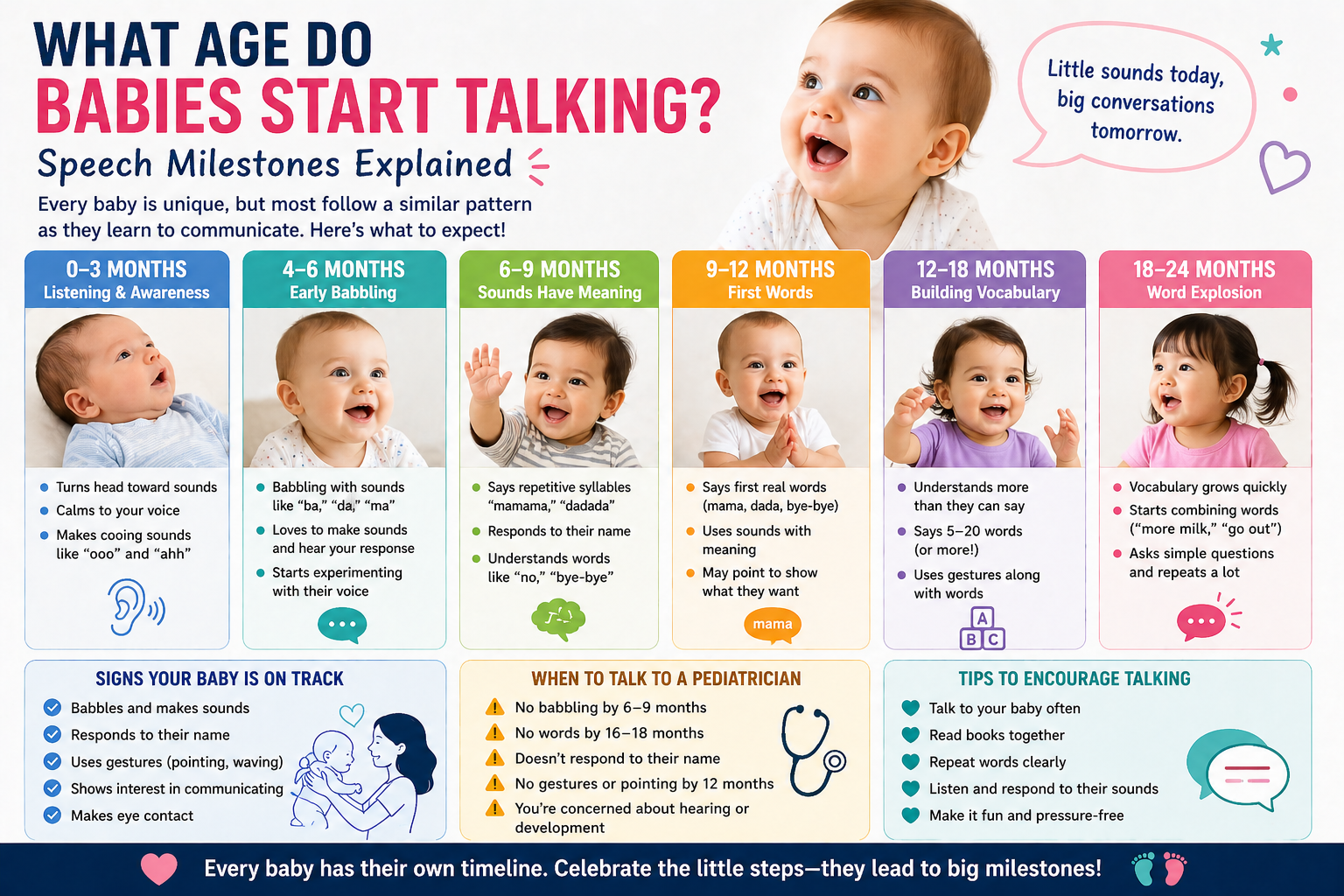
0–3 Months: The Sound of Awareness
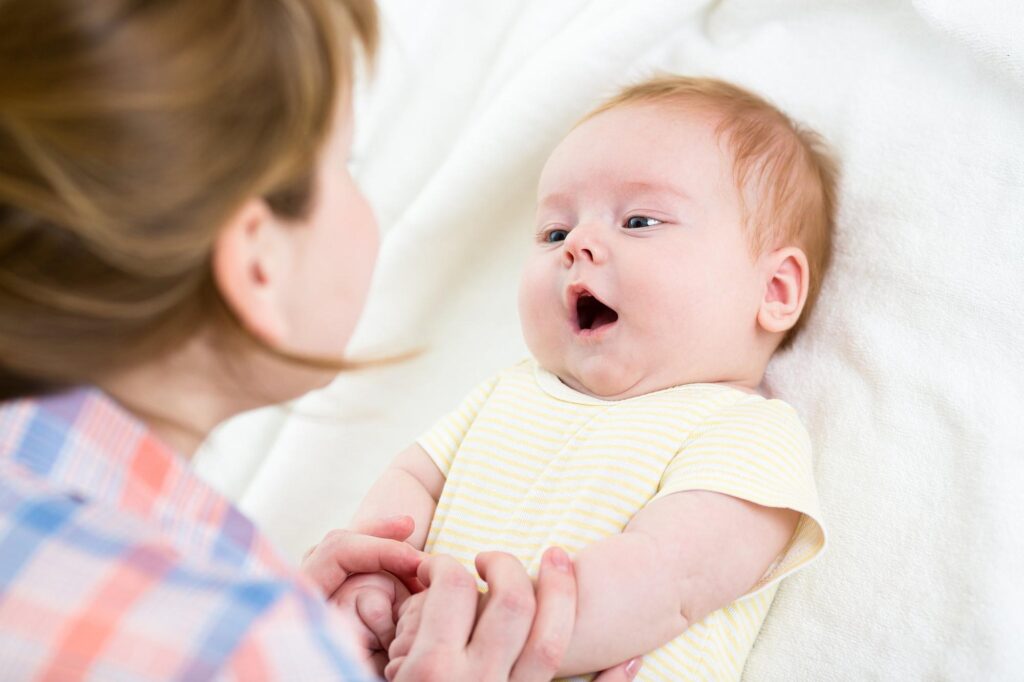
At this stage, babies aren’t talking, but they’re tuning in.
You’ll notice:
- Cooing sounds (“ooo,” “ahh”)
- Startling at loud noises
- Calming when they hear your voice
It’s less about speaking and more about recognizing sound patterns.
They’re learning that voices matter.
4–6 Months: The Babbling Begins
Now it gets interesting.
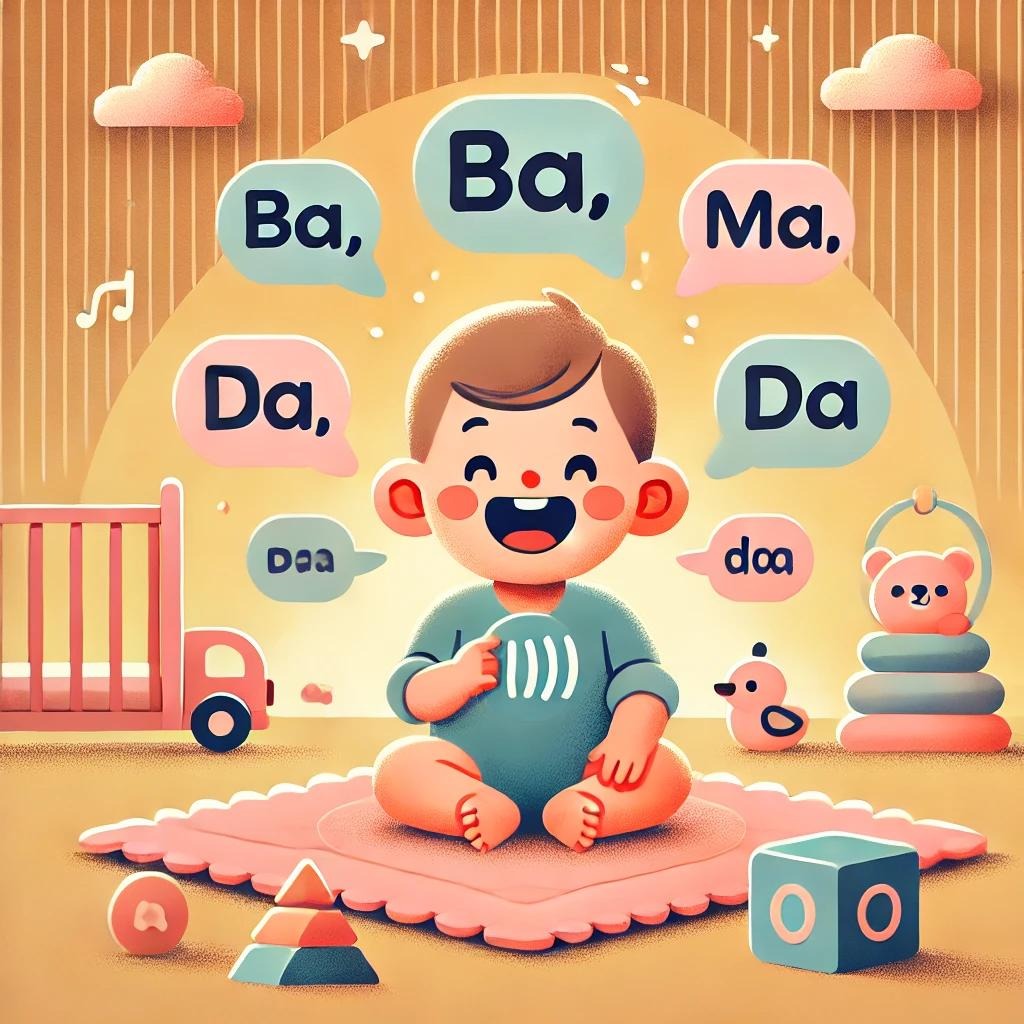
Babies start experimenting with sound.
- “Ba”
- “Da”
- “Ma”
It’s not language yet, but it’s practice.
They’re figuring out how their mouth works.
And yes, it might sound like a real word.
No, it probably isn’t intentional (yet).
6–9 Months: Meaning Starts Sneaking In
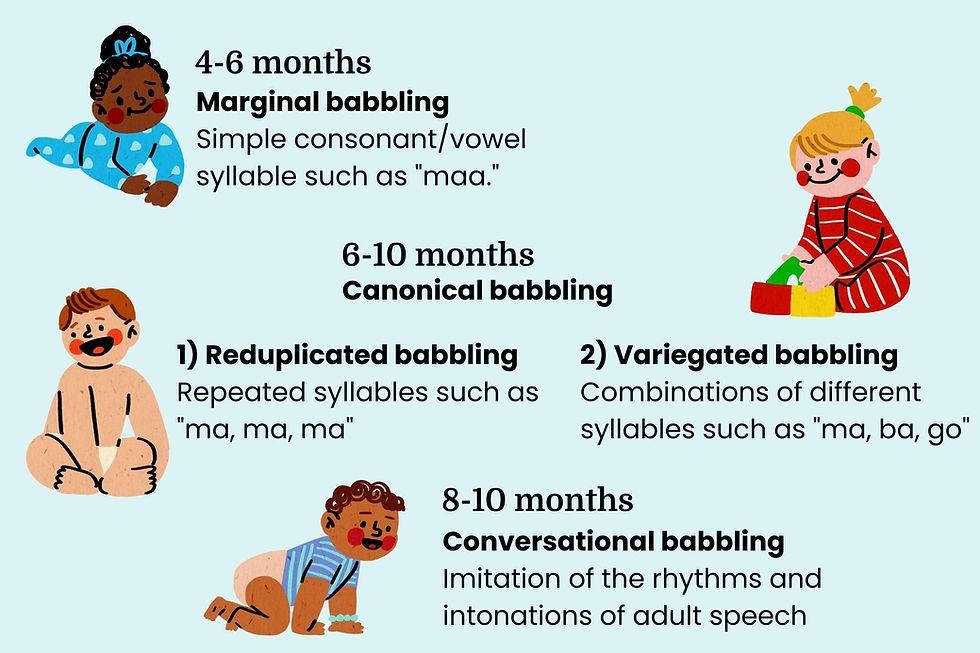
This is where things shift subtly.
Babies begin to:
- Respond to their name
- Recognize familiar words
- Use tone to express emotion
You’ll hear repeated babbling like:
- “mamamama”
- “dadadada”
Still not true words, but getting closer.
They’re connecting sound with meaning.
9–12 Months: The First Real Words
This is the window most parents are waiting for.
So, when do babies start talking?
For many, it’s around 10 to 12 months.
First words often include:
- “Mama”
- “Dada”
- “Bye-bye”
- Simple labels like “ball”
These words may not be perfect, but they’re intentional.
That’s the difference.
12–18 Months: Slow but Steady Growth
Now language builds, gradually.
You might see:
- 5–20 words by 18 months
- Understanding more than they can say
- Using gestures alongside words
This stage can feel slow.
But comprehension is expanding rapidly behind the scenes.
They know more than they show.
18–24 Months: The “Word Explosion” Phase
Suddenly, things accelerate.
- Vocabulary jumps quickly
- Two-word phrases appear (“more milk,” “go outside”)
- Mimicking becomes constant
This is where many parents go from:
“Why aren’t they talking?”
to
“Wow, they don’t stop talking.”
Why Some Babies Talk Earlier (or Later)
Here’s the honest truth:
There’s a wide range of normal.
Some babies:
- Say words at 9 months
- Others closer to 15–18 months
Both can be completely fine.
Speech development depends on:
- Environment
- Interaction
- Personality
- Even birth order
According to the American Academy of Pediatrics, variation in early speech milestones is common, as long as overall communication is developing.
Signs Your Baby Is On Track (Even Without Words)
If your baby isn’t talking yet, look for these instead:
- Making sounds or babbling
- Responding to their name
- Pointing or gesturing
- Making eye contact
- Showing interest in communication
Speech isn’t just words, it’s interaction.
When Should You Be Concerned?
This is where parents often feel unsure.
Consider talking to a pediatrician if your baby:
- Doesn’t babble by 6–9 months
- Doesn’t respond to their name by 9 months
- Has no words by 16–18 months
- Doesn’t use gestures (like pointing or waving)
- Seems to have trouble hearing
The Centers for Disease Control and Prevention recommends monitoring developmental milestones and acting early if delays are suspected.
Early support can make a big difference.
How to Encourage Talking (Without Pressure)
You don’t need flashcards or fancy tools.
Just interaction.
What actually helps:
- Talk to your baby constantly (yes, narrate your day)
- Read books together
- Repeat words clearly
- Respond to their sounds like it’s a conversation
- Give them time to respond
Language grows through connection, not correction.
What Doesn’t Help (As Much As You Think)
Let’s clear a few myths:
- Screen time doesn’t teach speech effectively
- Flashcards aren’t magic
- Forcing repetition can backfire
Babies learn language from people, not passive input.
Why Every Baby’s Timeline Feels Personal
Because it is.
You’re not just watching development, you’re waiting for a moment.
A word. A connection. A sign that they’re understanding you the way you understand them.
And that moment rarely arrives on schedule.
FAQs: When Do Babies Start Talking?
When do babies usually say their first word?
Around 10–12 months for many babies.
Is it normal if my baby isn’t talking at 1 year?
Yes, many babies start closer to 15–18 months.
What counts as a first word?
A consistent sound used with meaning (like saying “mama” to refer to you).
Do boys talk later than girls?
Sometimes slightly, but differences are usually small.
Can I speed up my baby’s speech development?
You can support it, but not rush it.
Should I worry if my baby only babbles?
Not if they’re interacting, responding, and progressing.
The Bottom Line
So, when do babies start talking?
Most begin around their first birthday, but the real answer is:
It starts long before that.
With sounds.
With eye contact.
With tiny attempts at connection.
Speech isn’t a single moment, it’s a buildup.
And when that first real word finally arrives, it won’t feel like a milestone chart.
It’ll feel like everything clicked at once.
*This article is for informational purposes only and should not be taken as official legal advice*